

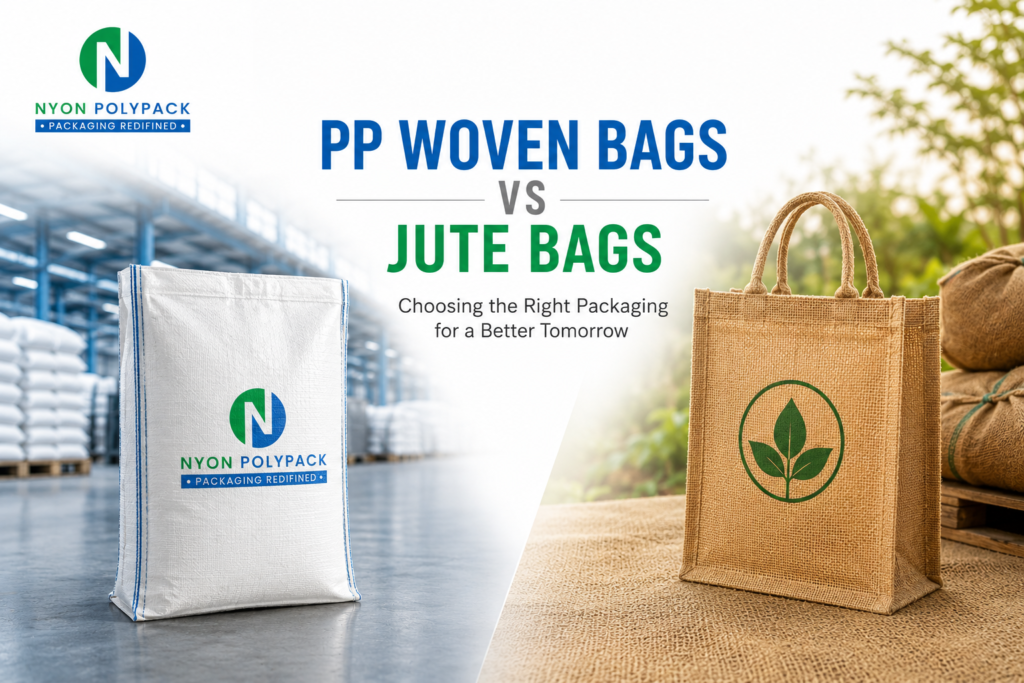
PP Woven Bags vs Jute Bags: Which Is Better for Your Business?
Introduction
Choosing the right packaging material can feel simple at first. You need a bag, your product needs to fit inside it, and the bag should not tear. Easy, right?
Not exactly.
For businesses dealing with agriculture, fertilizers, food grains, cement, chemicals, animal feed, pet food, or industrial materials, packaging is not just a cover. It is protection, branding, logistics support, and sometimes even the difference between profit and loss.
Two popular packaging options are PP woven bags and jute bags. Both have been used widely across different industries, and both have their own advantages. But when it comes to modern business requirements like moisture resistance, strength, customization, branding, cost control, and large-scale supply, the comparison becomes very important.
So, which one is better for your business — PP woven bags or jute bags?
Let’s compare them properly.
What Are PP Woven Bags?
PP woven bags are packaging bags made from polypropylene, a lightweight and strong plastic polymer. The polypropylene is converted into thin tapes, and these tapes are woven together to create a strong fabric. This fabric is then cut, stitched, laminated, printed, or converted into different types of bags.
The word “woven” simply means the tapes are interlaced in a crisscross pattern. This woven structure gives the bags excellent strength and flexibility.
PP woven bags are widely used because they are:
- Strong
- Lightweight
- Cost-effective
- Moisture-resistant when laminated
- Easy to customize
- Suitable for bulk packaging
- Reusable and recyclable
- Good for printed branding
They are one of the most common packaging choices for industrial and agricultural products.
How PP Woven Bags Are Made
The manufacturing process of PP woven bags includes:
- Polypropylene granules are melted.
- The molten material is converted into thin tapes.
- These tapes are stretched for strength.
- The tapes are woven into fabric using looms.
- The woven fabric is laminated or printed if required.
- The fabric is cut and stitched into bags.
- The final bags are checked for quality and packed for dispatch.
This process allows manufacturers to control the bag’s strength, size, weight, printing, lamination, and final application.
Common Uses of PP Woven Bags
PP woven bags are used for packaging:
- Rice
- Wheat
- Pulses
- Sugar
- Flour
- Salt
- Fertilizers
- Cement
- Chemicals
- Animal feed
- Pet food
- Seeds
- Minerals
- Sand
- Construction materials
In short, if a product needs strong and economical packaging, PP woven bags are often the first choice.
What Are Jute Bags?
Jute bags are made from jute fiber, a natural plant-based fiber. Jute is often called the “golden fiber” because of its natural shine and traditional importance in packaging.
Jute bags have been used for many years, especially in agriculture and commodity packaging. They are biodegradable and have a natural look, which makes them attractive for certain eco-conscious applications.
How Jute Bags Are Made
Jute fibers are extracted from the jute plant, processed, spun into yarn, and woven into fabric. The fabric is then cut and stitched into bags.
The process is more natural compared to plastic-based packaging, but the final bag depends heavily on fiber quality, weaving quality, and storage conditions.
Common Uses of Jute Bags
Jute bags are commonly used for:
- Grains
- Coffee beans
- Cocoa beans
- Potatoes
- Onions
- Promotional shopping bags
- Organic product packaging
- Handicraft and retail bags
Jute bags are especially popular where natural appearance and biodegradability are important.
PP Woven Bags vs Jute Bags: Quick Comparison Table
| Feature | PP Woven Bags | Jute Bags |
|---|---|---|
| Material | Polypropylene | Natural jute fiber |
| Strength | High and consistent | Good but varies by fiber quality |
| Moisture Resistance | Good with lamination | Low; absorbs moisture |
| Weight | Lightweight | Heavier |
| Cost | More economical for bulk use | Usually costlier |
| Printing | Excellent, especially with BOPP | Limited and less sharp |
| Customization | Very high | Moderate |
| Durability | Strong during transport | Can weaken in humid conditions |
| Recyclability | Recyclable | Biodegradable |
| Appearance | Industrial or premium printed | Natural and rustic |
| Best For | Fertilizer, cement, grains, food, chemicals, feed | Natural retail bags, coffee, some grains |
| Bulk Availability | Easy at scale | Depends on raw fiber supply |
1. Strength and Load-Bearing Capacity
When packaging heavy products, strength is the first thing to check. A weak bag can tear during filling, loading, stacking, or transportation. That means product loss, customer complaints, and extra cost.
PP woven bags are engineered for strength. Their woven structure helps distribute weight evenly across the bag. Depending on the fabric GSM, denier, tape quality, and stitching, PP woven bags can handle heavy loads such as 25 kg, 50 kg, or even more.
Jute bags are also strong, but their strength can vary because they are made from natural fiber. Fiber quality, humidity, weaving quality, and storage conditions can affect performance.
Why PP Woven Bags Perform Better for Heavy-Duty Packaging
PP woven bags are more suitable for heavy-duty packaging because they offer:
- Consistent strength
- Better tear resistance
- Controlled GSM and fabric density
- Strong stitching options
- Better performance in machine handling
- Less variation from batch to batch
For businesses that need large quantities of bags with consistent performance, PP woven bags are usually more reliable.
Where Jute Bags Still Work Well
Jute bags can still work well for certain products, especially where breathability and natural appearance are valued.
They are suitable for:
- Coffee beans
- Cocoa beans
- Potatoes
- Some grains
- Organic retail packaging
- Promotional bags
However, for heavy industrial packaging, fertilizer packaging, chemical packaging, or moisture-sensitive products, jute may not be the best choice.
2. Moisture Resistance
This is one of the biggest differences between PP woven bags and jute bags.
PP woven bags can be laminated with PP or PE coating to improve moisture resistance. This makes them suitable for products that must be protected from humidity, water exposure, and contamination.
Jute bags, on the other hand, naturally absorb moisture. This can be a problem for products like sugar, flour, salt, fertilizers, chemicals, and cement.
PP Woven Bags with Lamination
Laminated PP woven bags are useful for:
- Fertilizers
- Chemicals
- Salt
- Sugar
- Flour
- Animal feed
- Cement
- Powdered products
The lamination layer acts like a protective shield. It helps reduce moisture entry and keeps the product safer during storage and transport.
Jute Bags and Moisture Absorption
Jute is a natural fiber, so it absorbs moisture from the surrounding environment. In humid or wet conditions, this can lead to:
- Bag weakening
- Fungal growth
- Bad odor
- Product contamination
- Reduced shelf life
- Difficulty in storage
For businesses operating in humid climates or transporting goods over long distances, this can become a serious issue.
3. Cost and Affordability
Cost matters, especially when you are buying packaging in bulk.
PP woven bags are generally more economical for large-scale packaging. They are lightweight, easy to manufacture in bulk, and available in different specifications based on budget and product needs.
Jute bags are often more expensive because they depend on agricultural fiber production, processing, and labor-intensive manufacturing. Their prices may also fluctuate due to raw jute availability.
For businesses looking for cost-effective packaging without compromising strength, PP woven bags usually offer better value.
4. Durability During Transportation
Packaging faces a lot of stress during transportation. Bags are lifted, stacked, pushed, dropped, loaded onto trucks, stored in warehouses, and sometimes exposed to rough handling.
PP woven bags perform well in these conditions because they are flexible, tear-resistant, and lightweight. Laminated versions also offer better protection against external moisture and dust.
Jute bags can handle normal transport, but they may weaken if exposed to moisture or rough conditions for long periods.
For export packaging, long-distance transportation, and industrial supply chains, PP woven bags usually provide more dependable performance.
5. Printing and Branding Options
Today, packaging is not just about protection. It is also about presentation.
Your bag carries your brand name, logo, product details, instructions, safety information, and visual identity. So, printing quality matters.
Flexographic Printing on PP Woven Bags
Basic PP woven bags can be printed using flexographic printing. This is suitable for logos, text, product names, and simple designs.
It is commonly used for:
- Fertilizer sacks
- Cement sacks
- Grain sacks
- Chemical sacks
- Industrial packaging
BOPP Laminated PP Woven Bags for Premium Branding
For premium branding, PP woven bags can be laminated with BOPP film. This allows high-quality, colorful, and attractive printing.
BOPP laminated PP woven bags are ideal for:
- Rice packaging
- Pet food packaging
- Animal feed packaging
- Fertilizer packaging
- Retail food packaging
- Premium agricultural products
If your product needs to stand out on shelves, BOPP bags are much better than jute bags.
Printing Limitations on Jute Bags
Jute bags can be printed, but the printing is usually not as sharp, bright, or detailed as PP woven or BOPP laminated bags. The rough natural texture of jute limits fine graphics.
Jute works well for rustic, natural, or handmade branding. But if you want modern retail appeal, PP woven bags offer more flexibility.
6. Food and Agriculture Packaging Suitability
Both PP woven bags and jute bags are used in agriculture, but they serve different needs.
For grains, seeds, and agricultural commodities, unlaminated PP woven bags provide strength and breathability. Laminated PP woven bags are better when moisture protection is required.
Jute bags are traditionally used for agricultural products like potatoes, onions, coffee beans, and some grains. They allow air circulation but do not protect well against moisture.
For modern food packaging, PP woven bags offer more options, including food-grade materials, liners, lamination, and BOPP printing.
7. Fertilizer, Cement, and Chemical Packaging
This is where PP woven bags clearly perform better.
Fertilizers, cement, and chemicals need packaging that can handle:
- Heavy weight
- Moisture sensitivity
- Rough handling
- Outdoor storage
- Product leakage risk
- Branding and instruction printing
PP woven bags can be laminated, UV stabilized, fitted with liners, and customized for these needs.
Jute bags are generally not preferred for fertilizers, cement, and chemicals because they absorb moisture and may not provide enough protection.
8. Storage and Shelf Life
Storage conditions play a major role in packaging performance.
PP woven bags are easier to store because they are lightweight, compact, and resistant to many environmental factors. When laminated or UV stabilized, they perform better in challenging conditions.
Jute bags need dry storage. If they are stored in humid areas, they may absorb moisture, develop odor, or weaken over time.
For warehouses, distributors, and exporters, PP woven bags are easier to manage.
9. Environmental Impact and Recyclability
This is an important point because many businesses today want sustainable packaging options.
Are PP Woven Bags Eco-Friendly?
PP woven bags are plastic-based, but they are recyclable and reusable. Their durability allows them to be used multiple times in many applications. When collected and processed properly, polypropylene can be recycled into other plastic products.
The key is responsible use, reuse, and recycling.
Are Jute Bags Sustainable?
Jute bags are biodegradable and made from natural fiber, which gives them a strong environmental advantage. For businesses that prioritize biodegradable packaging and natural appearance, jute can be a good option.
However, sustainability is not only about biodegradability. It also includes product protection, wastage reduction, transport efficiency, and reuse potential.
If a bag fails and the product gets damaged, the environmental impact can become higher. So, the best choice depends on the product and supply chain.
10. Customization Options
PP woven bags offer excellent customization.
You can customize:
- Size
- GSM
- Color
- Lamination
- Printing
- BOPP film
- Gusset
- Liner
- UV protection
- Handle
- Stitching
- Valve
- Block bottom style
Jute bags can also be customized, but options are more limited compared to PP woven bags.
For businesses that need packaging designed exactly for their product, PP woven bags provide more control.
11. Industry-Wise Best Choice
| Industry / Product | Better Choice | Reason |
|---|---|---|
| Fertilizers | PP woven bags | Moisture resistance and strength |
| Cement | PP woven bags | Heavy-duty performance |
| Chemicals | PP woven bags | Liner and lamination options |
| Rice | PP woven bags / BOPP bags | Branding and protection |
| Wheat | PP woven bags | Cost-effective bulk packing |
| Sugar | Laminated PP woven bags | Moisture protection |
| Salt | Laminated PP woven bags | Moisture and contamination control |
| Coffee beans | Jute bags | Breathability and traditional look |
| Promotional shopping bags | Jute bags / PP woven bags | Depends on branding style |
| Pet food | BOPP laminated PP woven bags | Premium print and product protection |
| Animal feed | PP woven bags | Strength and bulk packaging efficiency |
When Should You Choose PP Woven Bags?
Choose PP woven bags if you need:
- Strong bulk packaging
- Moisture resistance
- Cost-effective packaging
- Custom printing
- High load capacity
- Laminated or BOPP options
- Food, fertilizer, cement, or chemical packaging
- Large-scale consistent supply
- Better durability during transport
For most industrial and commercial applications, PP woven bags are the more practical choice.
When Should You Choose Jute Bags?
Choose jute bags if you need:
- Natural fiber packaging
- Biodegradable material
- Rustic or organic appearance
- Breathability
- Packaging for coffee, cocoa, or certain produce
- Promotional eco-style bags
Jute bags are excellent for specific natural and retail applications, but they are not ideal for every industry.
Why Nyon Polypack Is the Right Choice for PP Woven Bags
At Nyon Polypack, we manufacture customized packaging solutions designed for real business needs. We understand that every product has different packaging demands.
We offer:
- PP woven bags
- PP woven sacks
- Raffia sacks
- Laminated PP woven bags
- BOPP bags
- Block bottom BOPP bags
- Fertilizer grade BOPP bags
- Pet food grade BOPP bags
- PP woven fabric
Whether you need bags for agriculture, fertilizers, cement, animal feed, pet food, food grains, sugar, salt, or chemicals, we can help you choose the right packaging type.
Conclusion
Both PP woven bags and jute bags have their place in packaging. Jute bags are natural, biodegradable, and suitable for certain agricultural and retail applications. But when it comes to strength, cost-effectiveness, moisture resistance, customization, printing, and industrial performance, PP woven bags are usually the better choice for modern businesses.
If your product needs dependable protection during storage, handling, transport, and retail display, PP woven bags give you more flexibility and better value.
For businesses looking for reliable and customized PP woven packaging, Nyon Polypack offers practical solutions built around your product, industry, and branding needs.
FAQs About PP Woven Bags vs Jute Bags
1. Are PP woven bags stronger than jute bags?
Yes, PP woven bags generally offer more consistent strength and better tear resistance, especially for heavy-duty industrial and bulk packaging.
2. Are jute bags more eco-friendly than PP woven bags?
Jute bags are biodegradable and made from natural fiber. PP woven bags are recyclable and reusable. The better choice depends on the product, usage, and recycling system.
3. Which is better for fertilizer packaging: PP woven bags or jute bags?
PP woven bags are better for fertilizer packaging because they can be laminated, UV stabilized, printed, and designed to resist moisture.
4. Can PP woven bags be used for food packaging?
Yes, food-grade PP woven bags can be used for rice, wheat, flour, sugar, pulses, salt, and other food products.
5. Which bag is better for branding?
PP woven bags, especially BOPP laminated bags, are better for high-quality branding because they support sharp, colorful, and attractive printing.